Used at low inclusion rates, Sucrose Esters or more commonly referred to as Sugar Esters, help improve emulsion stability, control viscosity during processing, reduce stickiness, inhibit crystallisation, and enhance shelf life. Their versatility makes them particularly valuable in bakery, dairy applications such as whipping cream, and plant-based formulations where both performance and label considerations matter. Available in conventional quality. Enquire for more information on organic availability or alternatives.
Availability
This is an ingredient we currently keep in stock at one of our warehouses, or have the ability to do so. Contact us to discuss in more detail.
Bag: 10 kg
400 kg (1 Pallet)
Sugar esters, also known as sucrose fatty acid esters, are emulsifiers made from sucrose and plant-derived fatty acids. This creates molecules with both water-loving and fat-loving properties, allowing them to stabilise emulsions, control viscosity, and improve texture across a wide range of applications .
Our Sucrose Ester of Fatty Acids offer precise, high-performance emulsification for demanding food systems where standard emulsifiers fall short.
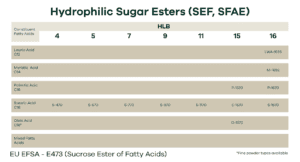
With multiple hydrophilic–lipophilic balance (HLB) options available, our sugar esters allow formulators to fine-tune functionality, improve processability, and achieve consistent results in both traditional and modern formulations.

Sucrose Esters are highly versatile and used across a broad range of food categories, particularly where stability, flow, and surface control are critical.
Typical applications include:
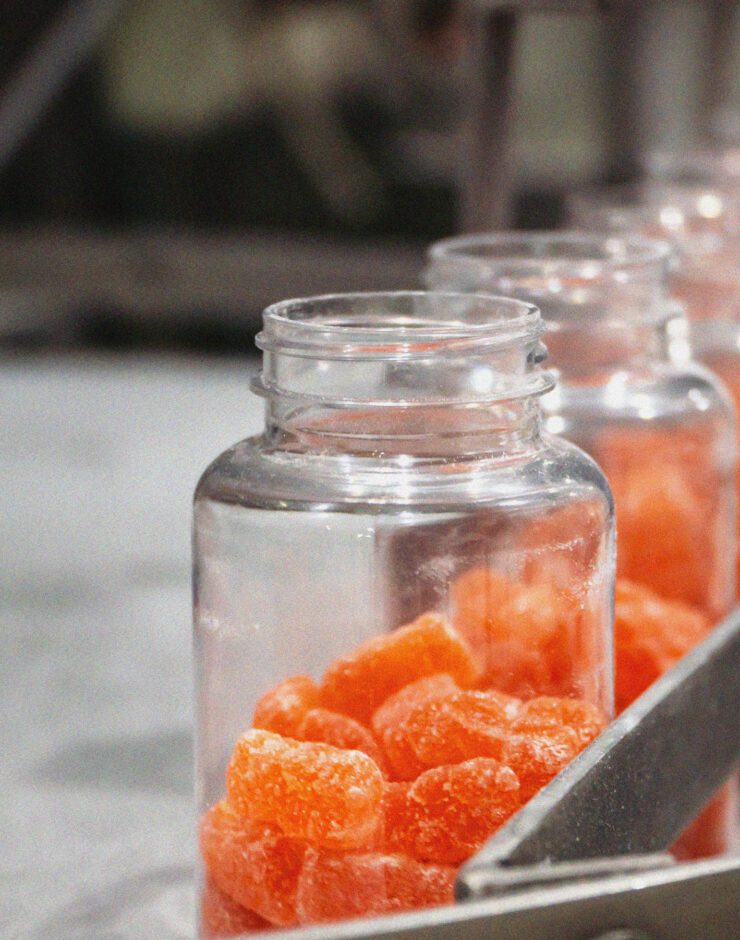
Sugar confectionery (gummies, hard candy, caramel, chewing gum)
Chocolate confectionary, such as decorations, coatings and fillings
Milk-based and dairy alternatives (such as almond, coconut, oat milk)
Fine baked goods such as biscuits, cakes and cereal bars
Dairy applications including ice cream, whipping cream and aerated systems
Fillings, spreads, and bake-stable applications
Powdered products and protein systems
Key functionalities include:
Emulsion stabilisation (water / oil control)
Viscosity reduction in heated systems
Control of starch gelatinisation and retrogradation
Defoaming in heating
Improved mechanical resistance
Anti-stick and anti-clumping performance
Control of crystallisation
Improved flow, coating, and enrobing behaviour
Shape retention and overrun control in creams and foams

We offer a broad range of sucrose fatty acid esters with carefully controlled HLB values to suit different formulation needs.
Sugar esters are used at low levels (typical inclusion levels of 0.03–0.5%) and contribute minimal nutritional impact to finished products.
Availability and regulatory status may vary by grade and region, and our technical team can advise on the most suitable option for your application. Full nutritional and regulatory information is available on request, depending on grade and market.
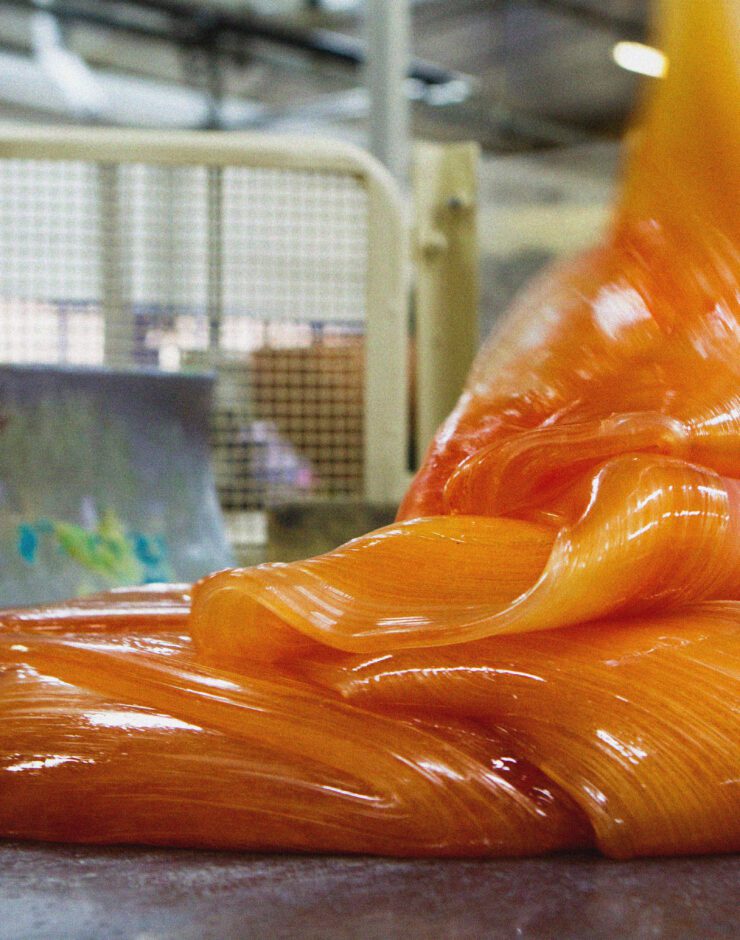
Sugar esters are multifunctional ingredients with a unique balance of hydrophilic and lipophilic properties.
Key properties:
Derived from sucrose and vegetable fatty acids
Adjustable HLB range for precise emulsification control
Heat-stable and process-tolerant
Effective at low inclusion levels
Compatible with a wide range of fats, sugars, and proteins
Neutral flavour and colour impact in finished products
Our team is here to help you find the emulsifying solution you need. Get in touch to discuss your application or request technical guidance.