
When Sugar Reduction Means Cost Reduction
Rapidly rising sugar prices, consumer demand for natural alternatives, and never-ending supply chain woes… the list goes on. In addition, the global landscape of food consumption is undergoing a significant shift, due to the introduction of sugar taxes in over 120 countries. This initiative is primarily aimed at guiding consumers towards healthier lifestyle choices by reducing the intake of sugar-laden foods and beverages. These taxes not only raise public awareness about sugar content, but ultimately aim to contribute to improving public health.
In short, the food and beverage industry is exploring more natural, less sugary pastures for its consumers, leading to a sugar replacement revolution!
According to Bloomberg Reports…
- Sugar prices, while experiencing a recent dip, remain on an upward trajectory and are still near a six-year high.
- The global supply and demand gap is widening, reducing the stock-to-use ratio.
- India, and Pakistan, amongst others, have introduced sugar export restrictions.
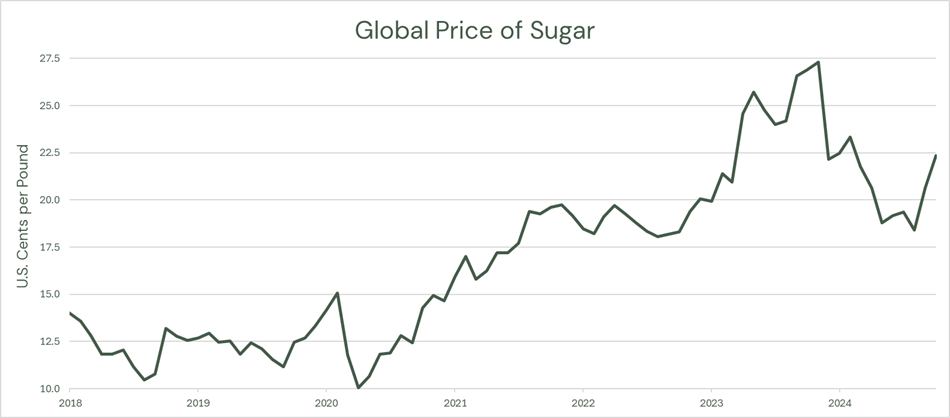
Moreover, high oil prices have led to competition for the output from the sugar sector, as economies are likely to use more cane sugar toward producing ethanol, further reducing the sugar supply.
Food and beverage manufacturers worldwide are feeling the squeeze in production costs, which contribute to the inflationary pressures on consumers.
Bottom Line: Manufacturers
Consumers are seeking natural, low-sugar solutions. Research and development teams across all industries are actively searching for new solutions to meet these demands, all the while still maintaining the integrity of their products’ taste.
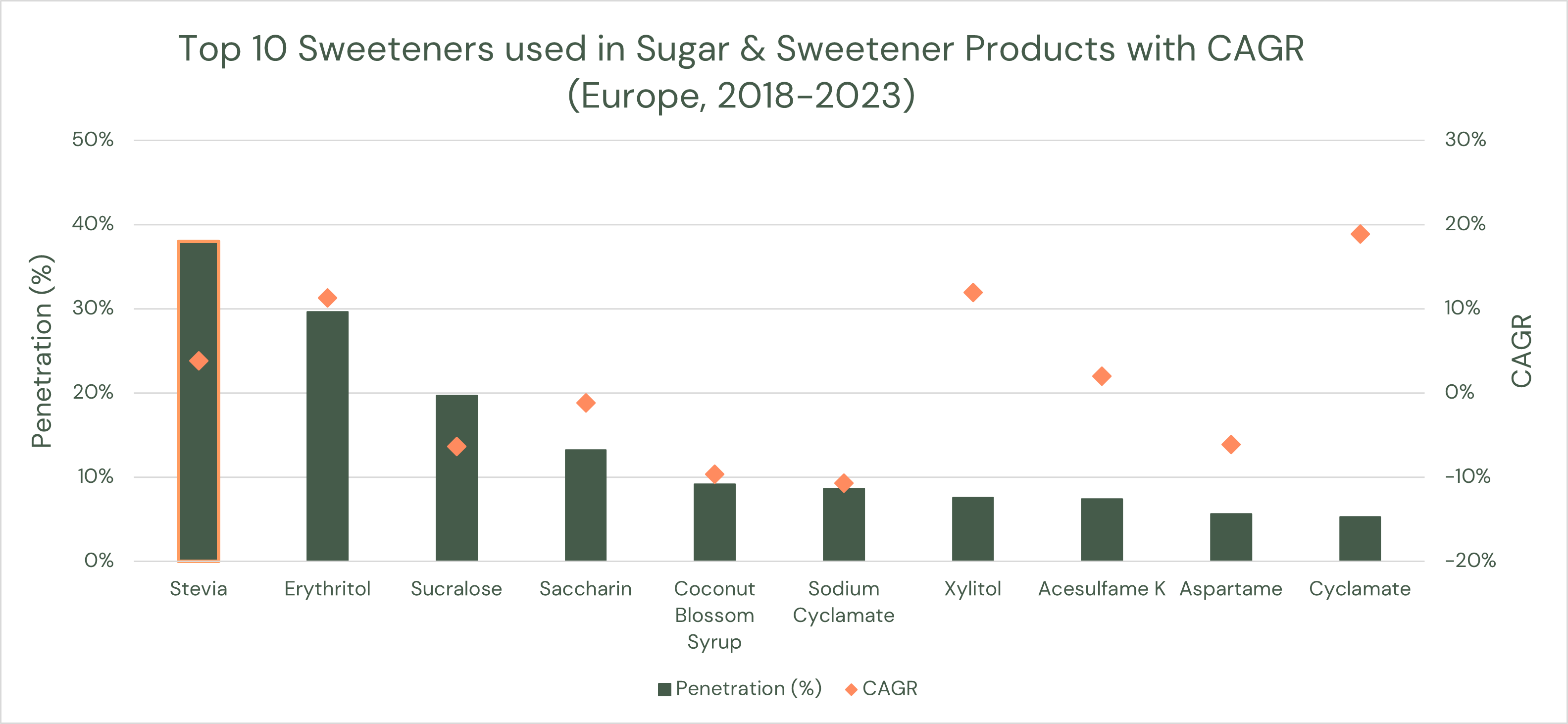
In these challenging times, stevia, a popular sugar alternative, has emerged as a promising solution.
What is Stevia?
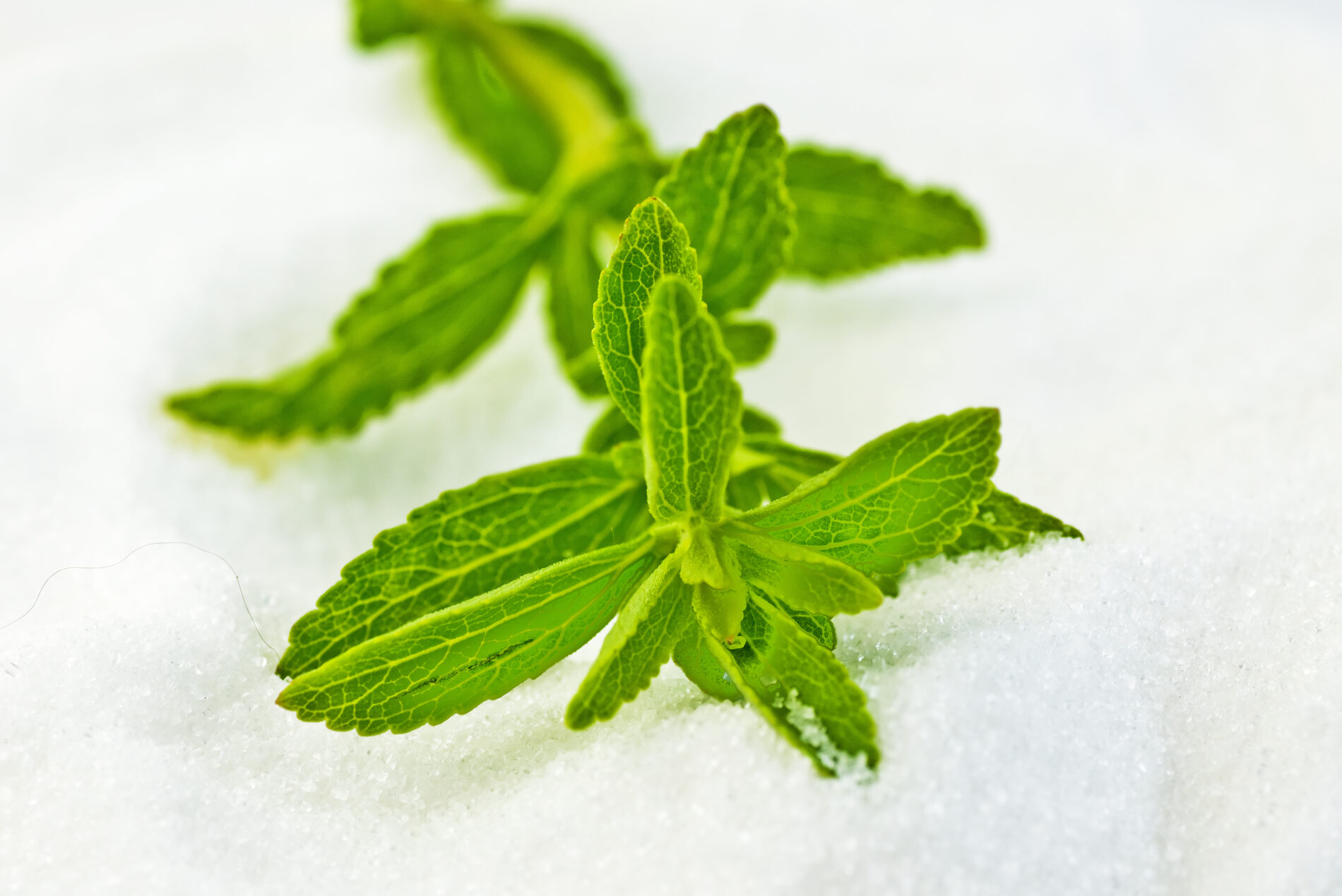
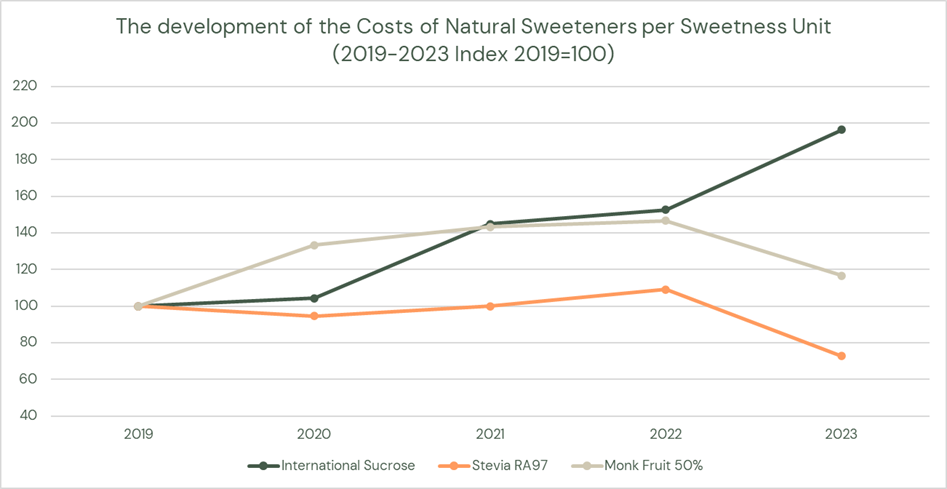
Native to Paraguay and Brazil, Stevia is a plant-based, 100% natural, sweetener and a substitute for sugar. It is extracted from the plant Stevia Rebaudiana and was first discovered by the indigenous people of Paraguay, who use the plant’s leaves to sweeten their drinks, labelling the plant “honey grass”. These leaves contain compounds called steviol glycosides, most of which are 200-450 times sweeter than sugar. Thanks to decades of agricultural science advancements and improvements in steviol glycoside yield levels, the global supply of stevia is healthy and cost-effective. Contrary to some reports of an industry shortage, the overall supply of stevia is at its lowest price point since it arrived on the global stage over a decade ago.
At this time of economic uncertainty and volatility, there is some welcome news for the food and beverage industry. Due to the agricultural science developments and the innovations in the sector, the price of stevia Reb A 97, the most popular stevia product, is becoming more and more affordable, and it is now an accessible option for manufacturers seeking to manage skyrocketing raw material costs.
Stevia – Applications & Functionality
Stevia serves as a natural sweetener, offering a sweetness level that is 200-450 times that of sugar. This makes it an ideal sugar substitute for those looking to reduce sugar intake. As a zero-calorie alternative, stevia is also popular among individuals aiming to lower their calorie consumption without compromising on sweetness. Additionally, its negligible impact on blood sugar levels makes it a suitable choice for people with diabetes.
There has been a wide range of stevia products developed over the last 15 years, offering a plethora of optimised solutions for almost all segments of the food and drink sector. These applications include:
- Soft Drinks
- Desserts
- Dairy Products
- Sauces and Condiments
- Snacks and Confectionary
- Sweeteners
Naturally Sweet Future Ahead
The benefits of natural sweeteners extend beyond just health. As governments and consumers push for healthier options, companies must align with these new market demands. Their efforts in improving product taste and affordability demonstrate the potential of natural sweeteners becoming a staple in the global effort towards healthier diets.
How can we help?
At Lehmann Ingredients, we are proud to partner with Howtian. Their industry-high yield has played a key role in driving significant progress towards reducing product costs. Furthermore, Howtian’s commitment to sustainability makes their stevia variants an even more compelling choice for manufacturers. The latest stevia varieties require less land, water, and energy to produce, aligning perfectly with global efforts to minimise environmental impact. A recent Life Cycle Assessment, conducted by the renowned Société Générale de Surveillance (SGS), has revealed that Howtian’s energy usage, carbon emissions, water usage, and land usage are all significantly lower than those of cane sugar and other industry standards. This achievement underscores Howtian’s leadership in sustainability within the sector.
With over 35 years of experience, Lehmann Ingredients is a trusted supplier of top-tier ingredients, both in the UK and internationally. Our expertise in sweeteners and ingredients has helped industry leaders and startups alike bring quality and innovation to their products. If you’re looking to enhance your formulations with reliable, high-quality sweeteners, our team is here to help. Reach out to us at enquiries@lehmanningredients.co.uk or call +44 (0) 1524 581560 to explore our full portfolio and discover how we can support your ingredient needs.