Introduction: More Than Just a Condiment
Mustard is one of the world’s oldest and most widely used condiments, with a history that stretches back thousands of years. From sharp, fiery table mustards to smooth, balanced dressings and complex culinary sauces, it plays a central role in cuisines across Europe, Asia, and the Americas.
Despite its apparent simplicity, mustard is a remarkably versatile ingredient – capable of delivering heat, acidity, texture, and depth of flavour in equal measure.
In this article, we explore what mustard is made of, how it has evolved through history, how it is produced today, and how modern formulation choices shape the mustards we see on shelves now.
A Brief History of Mustard
Mustard is one of the oldest cultivated spices in the world, with evidence of mustard seed use dating back to the Neolithic period over 5,000 years ago. Subsequent recorded appearances span multiple civilisations, highlighting mustard’s long-standing role as both a food and a functional ingredient.
In ancient India and China, mustard seeds were used not only in cooking but also in traditional medicine, valued for their warming and preservative properties. Archaeological finds show mustard seeds placed in ancient Egyptian tombs, suggesting both culinary and symbolic importance in early societies.
The evolution of mustard as we recognise it today began with the Romans, who ground mustard seeds and mixed them with wine or vinegar to create an early form of prepared mustard. This practice – combining crushed seeds with liquid to activate flavour – is the foundation of modern mustard production.
During the Middle Ages, mustard spread widely across Europe through monasteries and trade routes, becoming a staple condiment alongside meats and preserved foods. Over time, distinct regional styles emerged:
- France, particularly Dijon, developed smooth, sharp mustards often made with wine or verjuice.
- England became known for hot, powdered mustard, typically mixed fresh with water or vinegar.
- Germany favoured milder, sometimes sweeter mustards, often paired with sausages and cured meats.
By the 18th and 19th centuries, advances in milling, processing, and packaging enabled mustard to be produced at scale. This industrialisation transformed mustard from a locally prepared condiment into a globally traded product – cementing its place as a pantry essential with deep culinary roots and worldwide appeal.
Types of Mustard Seeds and Their Characteristics
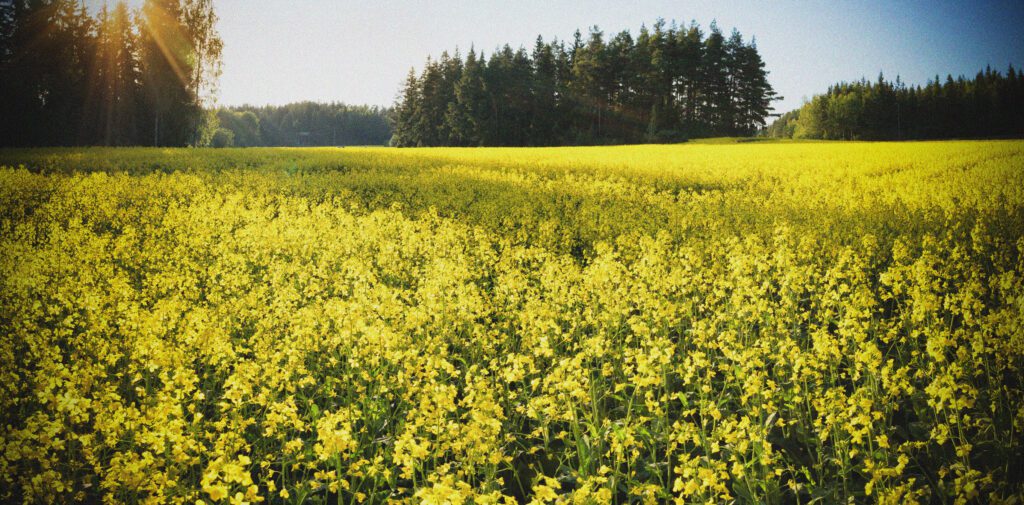
The character of a mustard is largely defined by the type of seed used. While all mustard seeds come from the same plant family, their flavour intensity, heat, and aroma vary significantly.
- Yellow mustard seeds (Brassica alba) are the mildest of the three and are most commonly used in American-style yellow mustard. They deliver a gentle heat with a clean, slightly tangy flavour, making them ideal for table mustards, dressings, and products aimed at a broad audience.
- Brown mustard seeds (Brassica juncea) offer a noticeably stronger and more complex heat. They are widely used in European mustards, including many Dijon and wholegrain styles. Brown seeds contribute a deeper, more rounded pungency and are often chosen when a sharper flavour profile is desired.
- Black mustard seeds (Brassica nigra) are the most pungent and intense. Traditionally used in Indian, Middle Eastern, and some specialty European mustards, they release a powerful heat when crushed and hydrated. Due to their strength, black seeds are typically used in smaller quantities or blended with other seeds to control intensity.
By selecting different seeds, or blending them together, mustard makers can fine-tune heat levels, flavour complexity, and overall sensory impact.
Types of Mustard by Style
Over time, regional preferences and culinary traditions have given rise to a wide range of mustard styles, each with its own distinct flavour, texture, and use.
- English mustard is known for its sharp heat and bright yellow colour. Often sold as a powder and mixed fresh with water, it delivers an immediate, intense pungency that pairs well with roasted meats and traditional British dishes.
- Dijon mustard originates from France and is typically smooth, pale in colour, and made using brown mustard seeds and wine or wine vinegar. It offers a clean, sharp flavour without excessive heat, making it popular in sauces, dressings, and classic French cooking.
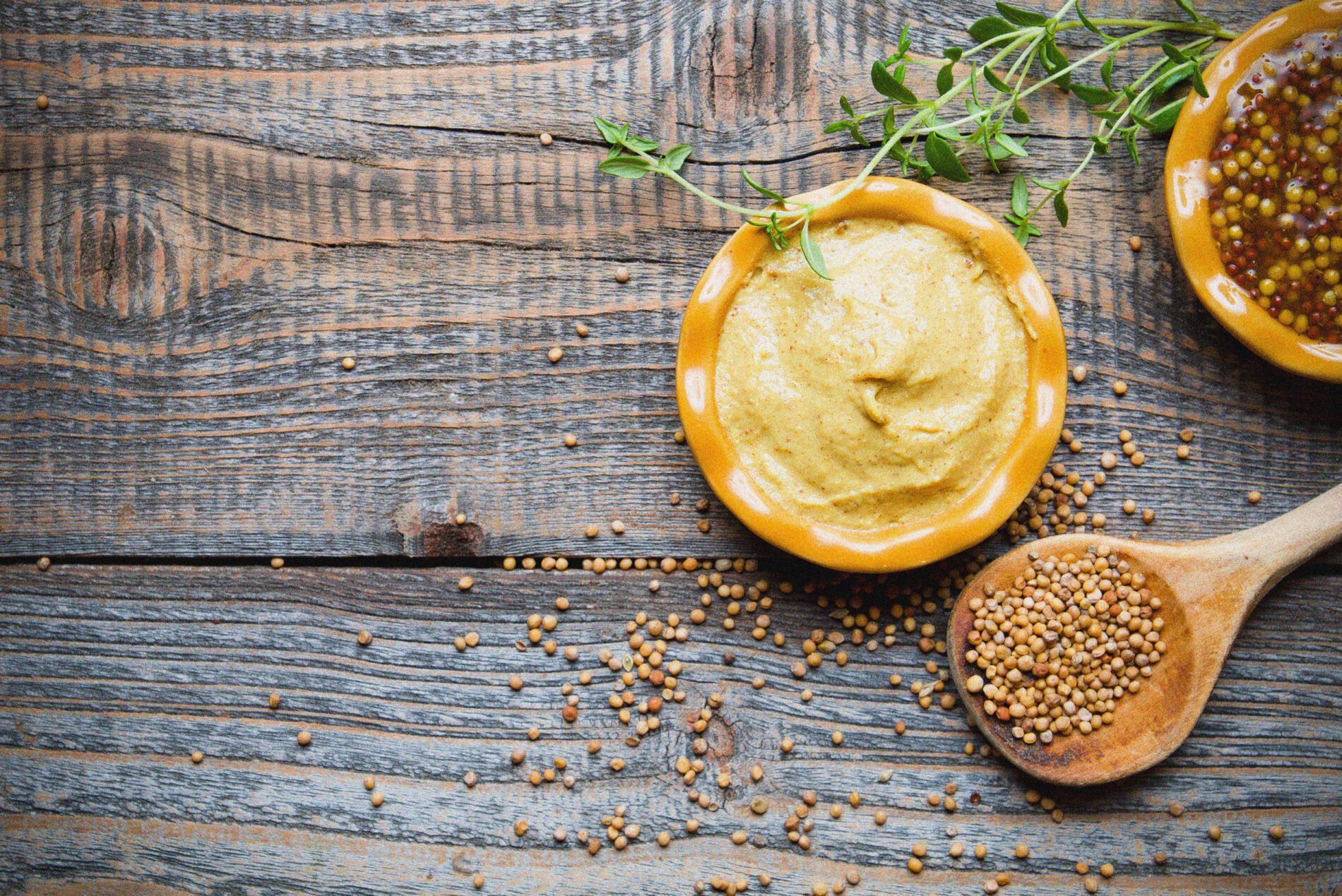
- Wholegrain mustard retains partially crushed mustard seeds, giving it a coarse texture and milder, more rounded flavour. It is commonly used in dressings, marinades, and as a finishing condiment where texture and visual appeal are important.
- American yellow mustard is mild, tangy, and brightly coloured, usually made from yellow mustard seeds and turmeric. Its gentle flavour makes it a staple for burgers, hot dogs, and casual dining applications.
- Honey mustard blends mustard with sweeteners such as honey or sugar to soften the heat and create a balanced sweet–savoury profile. It is widely used in dressings, dips, and glazes, particularly in foodservice and ready-to-eat products.
- Bavarian or sweet mustard is traditionally served with sausages in southern Germany. It is darker in colour, mildly spiced, and noticeably sweet, often made with caramelised sugar or fruit-based sweeteners to create a smooth, mellow taste.
Each style reflects how variations in seed choice, liquids, sweetness, and processing can transform the same basic ingredients into very different mustard experiences.
How Mustard Is Made
The process of making mustard is relatively straightforward, but each step plays an important role in shaping flavour, texture, heat, and shelf life. While the core method is shared worldwide, different regions and styles apply it in different ways to create the wide variety of mustards we see on the market.
Production begins with seed cleaning and selection. Mustard seeds are carefully sorted to remove debris and ensure consistency, with yellow, brown, or black seeds chosen based on the desired heat level, aroma, and flavour profile.
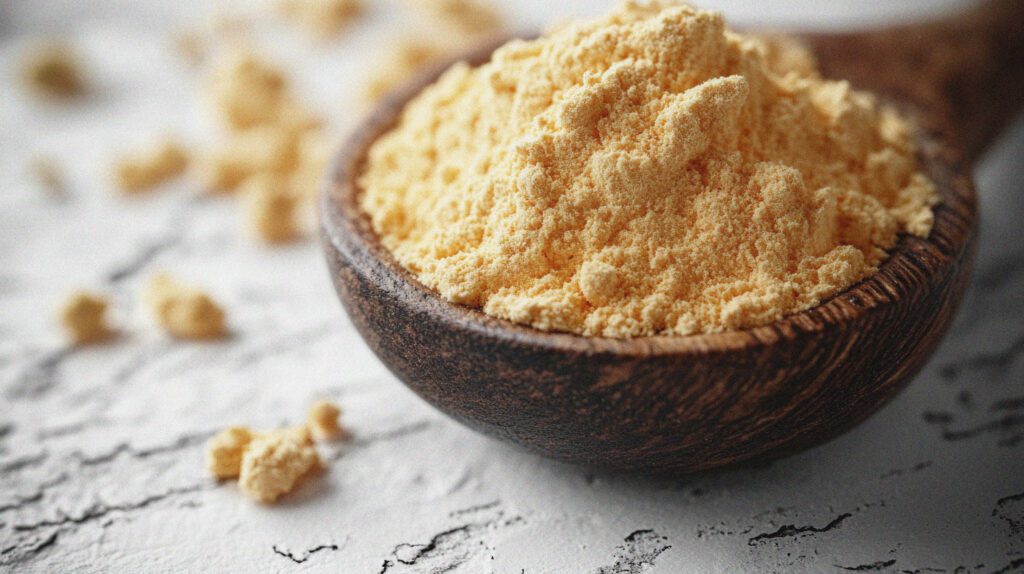
The seeds are then soaked and ground, either into a fine powder or a wet paste. This step activates the natural enzymes inside the seed that generate mustard’s characteristic pungency. How the seeds are milled has a major influence on the final product. Some mustards are made by grinding whole seeds into a paste, which retains natural oils and hulls, creating a smoother, creamier texture with a rounded heat. Others are made from dry-milled mustard flour, which produces a sharper, more volatile heat with less natural fat and body.
Next, the ground mustard is blended with liquids such as vinegar, water, wine, cider, or beer, along with salt, spices, and sometimes sweeteners. The choice of liquid affects acidity, flavour balance, and shelf stability, while sweeteners and spices define regional and product-specific styles.
After mixing, the mustard is typically allowed to mature, giving the flavours time to develop, mellow, and stabilise. During this stage, harsh notes soften and the texture becomes more uniform.
Finally, the finished mustard is packaged under controlled conditions to protect flavour and ensure consistent shelf life.
Processing temperature also plays a role. Cold processing tends to preserve more pungency and delivers a sharper heat, while warm processing reduces intensity and can improve stability and shelf life. Manufacturers select processing methods based on the intended style, target market, and how the mustard will be used in finished foods.
Functional Ingredients in Modern Mustard
Traditional mustard is already a surprisingly functional ingredient. When mustard seeds are crushed and mixed with liquid, they release natural compounds and oils that act as emulsifiers, helping oil and water stay blended. This is why classic mustards can stabilise dressings, sauces, and marinades on their own, creating a smooth, cohesive texture without the need for added emulsifiers.
In modern food manufacturing, however, mustard is often used within more complex systems such as ready-to-use sauces, dips, and flavoured dressings, where extended shelf life, transport stability, and consistency across batches are critical. In these cases, starches, fibres, or gums may be added to fine-tune viscosity, prevent separation, and maintain a uniform mouthfeel over time, especially when products are stored, chilled, or heat processed.
There is also a clear distinction between clean label and more traditional stabilisation approaches. Clean label formulations typically rely on native or physically modified starches and natural fibres that can be declared simply and transparently on ingredient lists. More conventional systems may use gums or modified stabilisers, which offer strong performance but are sometimes less attractive to label-conscious brands.
Sugar and salt reduction adds another layer of complexity. As manufacturers respond to HFSS rules and reduced-salt targets, the loss of sweetness or seasoning can affect both flavour and body. Functional ingredients are often used to restore fullness, balance acidity, and maintain texture when sugar or salt is lowered, helping products meet nutritional targets without losing consumer appeal.
Uses and Applications of Mustard
Mustard is one of the most versatile condiments in food production, used across a wide range of culinary and industrial applications. In its simplest form, it serves as a table condiment, enjoyed on sandwiches, burgers, and meats, where its sharpness and acidity cut through rich flavours.
Beyond the table, mustard is a key ingredient in dressings and vinaigrettes, where it provides emulsification, flavour depth, and balance. Its natural acidity and pungency make it especially effective in oil-based dressings and mayonnaise-style products.
In marinades and glazes, mustard acts as both a flavour carrier and a functional component, helping spices adhere to proteins while contributing tang and mild heat. It is widely used with meats, poultry, fish, and plant-based alternatives.
Mustard is also common in ready meals and sauces, where it adds complexity and familiarity to gravies, creamy sauces, and prepared dishes. In these applications, consistency and stability are often enhanced through careful formulation.
For foodservice and industrial use, mustard is supplied in bulk or as an ingredient within compound sauces, seasoning systems, and prepared foods. Here, performance, shelf life, and consistency are just as important as flavour, making mustard a reliable and adaptable component across large-scale production environments.
Clean Label & Reformulation Considerations
As consumer expectations evolve, mustard formulations are increasingly shaped by clean label and reformulation goals. One key focus is reducing sugar and salt, particularly in sweeter or flavoured mustards, to meet nutritional targets without sacrificing taste. This requires careful balancing of acidity, heat, and texture, often supported by functional ingredients that maintain body and flavour intensity.
Ingredient transparency is now just as important as taste. Shoppers increasingly expect short, recognisable ingredient lists, which has driven demand for mustard recipes based on simple components such as mustard seeds, vinegar, water, and salt, without added stabilisers or preservatives. Many traditional and premium mustards already meet these expectations naturally, while others are being reformulated to do so.
However, not all mustard styles are automatically clean label. Some formulations, particularly in wine-based or traditional European styles, may use sulphites such as sodium metabisulphite (E223) or potassium metabisulphite (E224) as preservatives or antioxidants. These ingredients are legally permitted and effective, but must be declared as allergens and E-numbers on labels, which can be a barrier for brands targeting clean label or “no added preservatives” claims. Importantly, sulphite-free mustard is entirely possible through careful processing and ingredient selection, and many modern retail products now avoid them altogether.
Allergen management is another consideration. Mustard itself is a regulated allergen in the UK and EU, meaning it must always be declared, but manufacturers often aim to minimise the presence of other allergens to improve suitability across retail and foodservice channels.
Finally, natural colour and flavour positioning plays a growing role in clean label strategy. Ingredients such as turmeric, spices, and the mustard seeds themselves are used to build colour and flavour naturally, rather than relying on artificial additives. Together, these choices allow manufacturers to deliver mustard products that are both compliant and aligned with modern consumer expectations.
Conclusion: A Simple Ingredient with a Complex Story
Mustard may be built from just a handful of ingredients, but its story is anything but simple. With a history spanning thousands of years and cultures across the globe, it has proven its staying power as both a culinary staple and a functional ingredient.
From ancient preparations to modern, clean label formulations, mustard continues to evolve alongside changing tastes, regulations, and production methods. Its ability to adapt – through variations in seed choice, processing, and formulation – makes it as relevant today as it was centuries ago.
Whether used in its purest form or as part of a carefully balanced recipe, mustard remains a perfect example of how a traditional ingredient can meet modern demands without losing its identity.
Request a Sample
Mustard FAQs
The primary ingredient in mustard is mustard seed. These seeds are typically ground and mixed with a liquid such as water, vinegar, wine, or beer, along with salt and sometimes spices or sweeteners, depending on the style.
The small visible grains are whole or partially crushed mustard seeds. These are most commonly found in wholegrain or coarse mustards and contribute both texture and bursts of flavour.
Mustard’s heat comes from isothiocyanates, compounds released when mustard seeds are crushed and mixed with liquid. Unlike chilli heat, mustard heat is sharp and nasal rather than lingering on the tongue.
Traditional mustard is made by cleaning and soaking mustard seeds, grinding them, then blending with liquid, salt, and optional seasonings. The mixture is allowed to mature so flavours develop before packaging.
English mustard typically uses brown or yellow mustard seeds, combined with water and vinegar. It is known for its strong heat and minimal sweetness compared to other styles.
Yes. Dijon mustard traditionally uses brown mustard seeds and is made with wine or wine vinegar rather than plain vinegar. This gives it a smoother texture and sharper, more complex flavour.
Generally, mustard is lower in sugar and calories than ketchup. However, nutritional value depends on the specific formulation, particularly salt and sugar levels.
Mustard seeds naturally contain compounds called isothiocyanates, which create mustard’s pungent heat and can be irritating in very high concentrations. However, when used in normal food preparation, mustard is completely safe and widely approved for consumption around the world.
In the UK and EU, mustard is also classified as a regulated allergen, meaning it must be clearly labelled on food products because some individuals are allergic to it. This does not mean mustard is toxic or unsafe for the general public – it simply ensures people with mustard allergies can avoid it.
In moderation, mustard can be part of a balanced diet. It is low in fat and calories, but some varieties can be high in sodium, which should be considered for salt-restricted diets.
Mustard is often cited as one of the world’s oldest prepared condiments, with documented use dating back over 5,000 years in ancient India, China, Egypt, and later Rome.