Freezing does not remove water from food. It turns the water into ice, leaving less available for microbial growth. This simple example helps explain water activity and why it can be a better guide to microbial stability than moisture content alone.
For formulators and technical teams, water activity affects shelf life, texture and microbial stability. It can influence whether a sauce remains stable on the shelf, or whether a jerky product requires refrigeration. Understanding how it is measured and controlled helps manufacturers make better formulation and ingredient choices.
Water Activity vs Moisture Content
Water activity measures the water available for microbial growth and chemical reactions within a product. It is expressed as aw on a scale from 0 to 1, with pure water having an aw of 1.0. It is often described as a measure of “free” water, although the technical definition is based on the relationship between the vapour pressure of water in the product and that of pure water at the same temperature.
This is different from moisture content, which measures the total amount of water in a product, both bound and free. Two products can have identical moisture content but very different water activity levels, depending on how that water is held within the food’s structure. A product with 20% moisture might have a high aw if most of that water is free, or a much lower aw if it’s tightly bound to sugars, salts or proteins.
This distinction matters commercially. Two formulations with the same moisture reading can behave completely differently on the shelf. Water activity is the more reliable predictor of stability, which is why it’s become the standard measure in food safety and quality control.
Water Activity and Microbial Growth
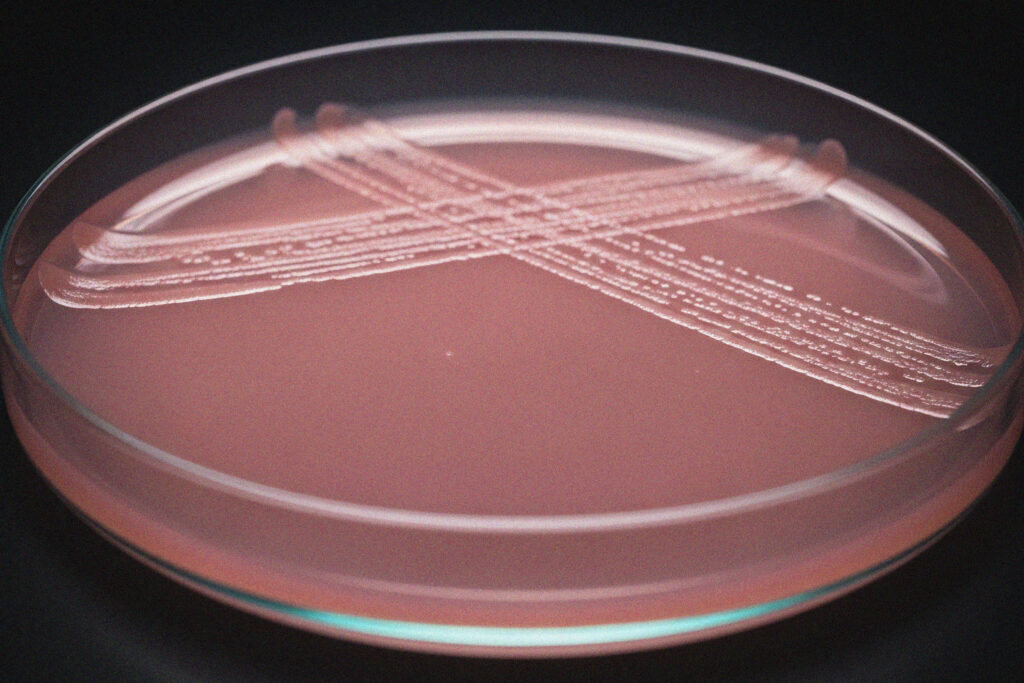
Microorganisms need free water to grow. Reduce the aw of a product enough, and you slow or stop that growth entirely. This is one of the oldest principles in food preservation, long predating any formal understanding of the chemistry behind it.
Different organisms have different tolerance thresholds:
- Most bacteria, including Salmonella, need an aw above roughly 0.90 to grow. Some, like Staphylococcus aureus, can tolerate levels down to about 0.86.
- Most yeasts stop growing below an aw of about 0.87 to 0.88, though osmophilic yeasts can survive much lower.
- Most moulds require an aw above roughly 0.80, with some xerophilic species able to grow down to 0.65 or lower.
Below an aw of 0.60, microorganisms are generally unable to grow. This does not make a product automatically safe or shelf-stable, as survival, toxins already present, processing, packaging, pH and storage conditions may still need to be considered. Water activity is therefore used alongside other controls when assessing intermediate-moisture and shelf-stable foods.
How Water Activity is Measured and Controlled
Water activity is measured using dedicated meters, most commonly based on chilled mirror dew point or capacitance sensor technology. A sample is sealed in a small chamber and the instrument reads the equilibrium relative humidity of the air above it, which corresponds directly to the product’s aw.
Controlling water activity, rather than just measuring it, comes down to formulation. The main approaches are:
- Reducing overall moisture through drying, evaporation or concentration.
- Binding free water using ingredients that hold water more tightly, reducing how much is available for microbial activity.
- Adjusting formulation ratios so that a larger proportion of water is bound rather than free.
Water activity may be monitored as part of a HACCP-based food safety plan where it is relevant to the identified hazard and product design. If it is used as a critical limit, the value and monitoring method need to be scientifically justified and validated for the product and process.
For many manufacturers, reducing water through drying or evaporation is not practical because it can change yield, texture or processing requirements. Humectants offer another option by reducing the availability of water within the existing formulation.
Ingredient Solutions for Lowering Water Activity
Humectants are ingredients that bind water within a formulation, lowering aw without necessarily changing the overall moisture content. They work by competing with microorganisms for available water, holding it in a form that isn’t accessible for growth.
Common humectants include:
- Glycerin (glycerol). Highly effective at binding water, widely used in bakery, confectionery and pet food. Also contributes to texture and softness.
- Sorbitol. A polyol with strong humectant properties, commonly used in baked goods, meat products and confectionery where sweetness needs to stay moderate.
- Maltitol. A polyol widely used for sugar reduction as well as its humectant properties, available as both Maltitol Crystalline and Maltitol Syrup.
- Salts, particularly sodium chloride. One of the oldest methods of water activity control, used in cured meats, sauces and pickled products.
- Sugars, such as sucrose, dextrose and fructose. Effective humectants in jams, syrups and confectionery, though sweetness level needs to be balanced against product requirements.
- Propylene glycol. Used in some bakery and pet food applications for its strong water-binding capacity.
Choosing the right humectant, or combination, depends on the product. Formulators need to balance water activity targets against taste, texture, cost and labelling requirements. A humectant that works well in a savoury snack may not suit a confectionery product where sweetness or mouthfeel is already tightly specified.
Applications Across Product Categories
Water activity control shows up across a wide range of product types:
- Bakery. Cakes, pastries and bread rely on humectants to stay soft and mould-free over their intended shelf life.
- Meat and snacks. Jerky, biltong and cured meats use salt, sugar and other humectants to reach aw levels low enough for ambient storage.
- Pet food. Semi-moist pet food depends on precise water activity control to remain palatable and shelf-stable without refrigeration.
- Confectionery. Chewy sweets and fillings use sugars and polyols to control both texture and stability.
- Sauces and dressings. Salt, sugar and acid work together to keep water activity low enough to prevent spoilage in ambient-stable products.
- Supplements and nutrition bars. Humectants help maintain texture and prevent hardening or crystallisation over time.
In each case, the ingredient choice isn’t just about hitting an aw number. It’s about doing so while keeping the product’s taste, texture and cost where they need to be.
Sourcing and Quality Considerations
Getting water activity right in a formulation is only half the job. The humectants and ingredients used to control it need to perform consistently, batch after batch.
This means:
- Consistency of specification. Small variations in purity or concentration can shift aw results and affect shelf-life testing.
- Certification and traceability. Many applications, particularly in pharma, supplements and export markets, require documented sourcing and quality assurance, often verified through GFSI-recognised certification schemes.
- Supply reliability. Formulators need confidence that the humectant they’ve validated in testing will be available at the same specification for ongoing production.
Ingredient consistency matters because even a similar substitute may require further water activity and shelf-life testing. Reliable sourcing can reduce the risk of unexpected formulation changes and additional validation work.
Conclusion
Water activity helps manufacturers assess microbial stability, set formulation targets and understand why products with similar moisture content may perform differently. It should be considered alongside factors such as pH, temperature, packaging, processing and the intended shelf life.
For manufacturers, the aim is to reach the required water activity while maintaining taste, texture, cost and labelling requirements. The formulation then needs to perform consistently in production and throughout the intended shelf life.
FAQs
Moisture content measures the total water in a product, both bound and free. Water activity measures only the free water that’s available for microbial growth. Two products can share the same moisture content and still have very different water activity levels.
Fresh produce, raw meat, dairy and most ready-to-eat meals typically sit above aw 0.95. These foods support microbial growth easily, which is why they need refrigeration or have short shelf lives.
An aw of 0.85 is used as a regulatory or guidance threshold in some jurisdictions and product categories, but it should not be presented as a universal definition of potentially hazardous food. The applicable limit depends on the product, organism, pH, processing conditions and relevant food safety requirements. UK manufacturers should confirm the appropriate criteria through their HACCP study and current regulatory guidance.
Water activity meters use chilled mirror dew point or capacitance sensor technology. A sample is sealed in a chamber and the instrument reads the equilibrium relative humidity of the air above it, which corresponds directly to the product’s aw.
Most moulds require an aw above approximately 0.80 to grow, although some xerophilic moulds can grow at considerably lower levels. A suitable target must be established for the specific product, organism risk, process, packaging and storage conditions rather than from a single general threshold.
If you need further advice on water activity control, humectants or ingredient selection, our team is here to help. We supply glycerine, polyols, salts and sugars at consistent specifications, backed by the documentation your quality team needs. Get in touch with Lehmann Ingredients for straightforward, practical support.