
Starch is used in everything from sauces and bakery products to dairy alternatives and drinks. However, choosing the right starch is not always straightforward. Native, modified and clean label starches behave differently, so the best choice depends on the product, the manufacturing process and the result you need.
We look at the differences between native starch, modified starch and clean label modified starch, including how they are made, where they are used and what manufacturers need to consider when choosing between them.
What starch is made of
Starch contains two polysaccharides: amylose and amylopectin. In simple terms, amylose helps provide firmness and gel strength, while amylopectin contributes viscosity and stability. Their ratio varies between starch sources and has a major influence on how the starch performs when exposed to heat, acidity or mechanical stress.
Native Starch
Native Starch
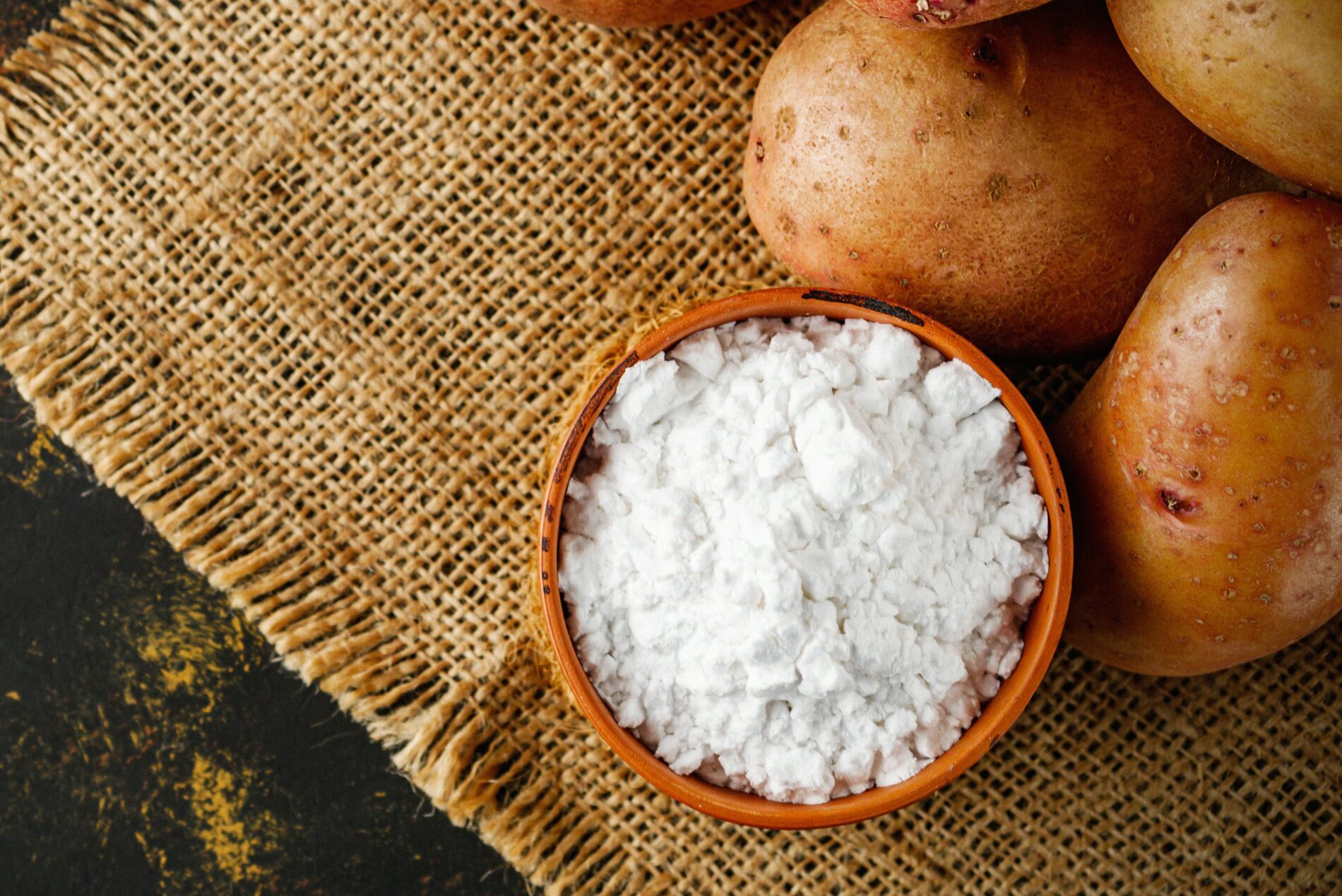
Native starch is a carbohydrate derived from the natural glucose storage compounds found in plants and grains. It occurs in wheat, corn, potatoes, rice, tapioca, and many other crops, where it serves as the plant’s primary energy reserve. Producing native starch involves processing the raw material to isolate the starch granules, which retain the properties of their original source.
In its natural state, native starch has limited stability. Heat, acidity, and mechanical stress can all affect its functionality, causing it to form lumps or lose viscosity during processing.
Despite these limitations, native starch remains an important ingredient across food and non-food applications. It contributes texture, viscosity, and structure in products such as soups, sauces, and baked goods.
Modified Starch
Modified starches are classified as food additives because they undergo a chemical modification process. They are highly functional, but not available in organic quality.
Modification gives starch functional properties that native starch cannot offer, including greater process tolerance and storage stability against temperature, pH, and shear stress. It also allows manufacturers to control texture and improve properties such as water uptake and fat absorption. Different modifications produce different functionalities, so the right modified starch depends on the application.
Key benefits of modified starch
- Enhanced functional properties, such as improved viscosity, stability, and texture, leading to more consistent product quality
- Improved tolerance to heat, acidity, and shear during processing and storage, helping products maintain their intended quality throughout shelf life
- Versatility, with the ability to thicken, gel, bind, or emulsify depending on the modification used
- Cost-effectiveness compared with alternative ingredients, often improving processing efficiency alongside product quality
- Clean label and organic alternatives are available where conventional chemically modified starch is unsuitable.
- Support for reduced-fat, reduced-calorie, or gluten-free formulations while maintaining the required texture and eating quality
- Ease of processing, with tolerance for a wide range of temperatures and shear forces
Modified Starch Applications
Modified starch is used across a range of industries. In food, it improves texture, stability, and shelf life in baked goods, processed foods, sauces, and dairy products.
In pharmaceuticals, modified starch supports drug delivery systems and tablet formulations. Its controlled release properties and compatibility with active ingredients make it a useful component in a range of formulations.
In textiles, modified starch strengthens and smooths yarns during weaving. It forms a protective layer on the fabric that supports the weaving process and improves the finished textile.
Clean Label Modified Starch
Clean label modified starch is treated mechanically, for example by extrusion, or with enzymes rather than chemical modification. This can improve its performance while allowing it to be declared in a way that is more familiar to consumers. Organic grades are also available.
Clean label benefits
- Process stability
- Shear stability
- Storage stability
- A texture range from elastic to creamy and short
- No retrogradation
- No syneresis
- pH stability
- Temperature stability

Clean Label Applications
Clean label modified starch can deliver many of the same functional benefits as conventional modified starch. It is particularly useful where manufacturers want process stability without a chemically modified starch declaration.
In food applications, clean label modified starch can provide texture, stability and mouthfeel in bakery products, sauces, dressings and dairy alternatives. It can also control viscosity in juices, smoothies and plant-based drinks. Outside food, it is used as a thickener, stabiliser or emulsifier in personal care products such as creams, lotions and hair care formulations.
For manufacturers, the attraction is straightforward: cleaner labelling without losing the texture and stability needed in the finished product.
Modified Starch: Common Misconceptions
Natural vs. synthetic. Modified starch is sometimes assumed to be a wholly synthetic ingredient. It is produced from naturally occurring starch sources such as corn, potatoes, and wheat. Physical, chemical, or enzymatic treatment alters the starch to deliver specific functional properties.
Health and safety. Some consumers have concerns about the safety of modified starch. Regulatory bodies including the Food Standards Agency (FSA) in the UK, the Food and Drug Administration (FDA) in the US, and the European Food Safety Authority (EFSA) in the EU have assessed modified starch and confirmed it is safe for consumption within approved limits. It undergoes strict safety assessment before use is permitted, and it can support healthier formulations by helping reduce fat content and improve texture without compromising safety.
Processed food stigma. Modified starch is often linked in people’s minds to heavily processed foods. In practice, it is used across a wide spectrum, from highly processed products to minimally processed ones, and is not limited to any one category.
Granular (Cook-Up) vs. Pregelatinised (Pre-Gel) Starches
Granular, or cook-up, starches need to be cooked to activate their thickening properties. This makes them well suited to products that are cooked as part of manufacturing, such as soups and sauces, where they deliver a smooth texture once heated.
Pregelatinised, or pre-gel, starches, whether clean label or modified, do not need cooking. They thicken on contact with hot or cold water, making them suitable for instant or no-cook products such as salad dressings.
Pre-gel clean label starches suit instant and no-cook products but may cost more and deliver a less smooth texture. Modified pre-gel starches can provide greater functionality, although labelling requirements and additional processing may affect consumer perception and cost. Selection depends on the application, processing conditions, desired texture, and target market.
How to Decide What Starch to Use
There is no single starch that works for every product. Before recommending an option, we would normally start with the following questions:
- What is the end product?
- What function does the starch need to perform (viscosity, emulsion, mouthfeel, cling, and so on)?
- What are the cook time, cook temperature, and shear conditions (type of equipment)?
- What is the pH of the product?
- What is the desired end texture?
- Is freeze-thaw stability required?
- What is the brix of the product?
- Is clean label a requirement?
Future Trends
Starch development is increasingly focused on improving functionality with less energy, water and waste.
Sustainability is a growing focus, with producers looking at renewable energy sources, reduced water usage, and less waste across the production process.
Genetic engineering is being explored to improve starch properties at the source, tailoring starch-producing plants for better functionality, nutritional profiles, and resistance to environmental stress.
New processing techniques, including enzymatic engineering, ultrasonication, and microwave-assisted modification, are being explored to make starch modification more efficient, precise, and sustainable.
These technologies are still developing, but the direction is clear: starch producers are looking for ways to deliver the required functionality with a lower environmental impact.
Lehmann Ingredients have a 35-year history in the sourcing and supply of ingredients for customers both in and outside of the UK. We are trusted suppliers of high-quality starch ingredients to a number of established companies, from start-ups to more established companies leading in various retail categories.
Contact a member of our team to find out more about our starch portfolio by emailing enquiries@lehmanningredients.co.uk or calling +44 (0) 1524 581560